Monday, February 18, 2013

United Airlines: Mind your manners to avoid self-desctruction

I'm still waiting for United Airlines to offer an appropriate apology.  Or thank you.  Or any kind of indication that I'm an even remotely valued customer.

My obstinacy -- and my willingness to continue to lambast United -- arises from an incident a few weeks back at the DFW airport.

I had a seat of the last Sunday evening flight to Newark.  I checked in at the gate about a half hour before departure; the agent told me the plane had just arrived; it needed to deplane; and boarding would begin in 15-20 minutes.

I went to the United Club and returned in about 25 minutes, at what would have been 1-2 minutes before the scheduled departure time.  When I got to the gate, the door had been shut and the plane just pushed back from the gate.

I stood there speechless.  Eventually, when the gate agent returned, I stared with baffled frustration and could barely ask: "what?!?"

His general response: "too bad."

Now, I had a reserved first class seat as a Platinum-level frequent flyer.  I had been in the United Club.  And the plane left without me, after I had made it known that I was in the airport and intended to travel.
After the 787 debacle, UA might have considered putting
some eggs in other baskets - like customer service.

I have never missed a flight in my life -- with hundreds of hundred of flights under my belt.

The agent in the United Club offered some considerate help.

In the end, the best I could do - I had to be back for work the next morning: I bought an $800+ ticket to Philadelphia on American, arrived at midnight, and then drove home to New York, in bad weather, making it to my apartment at about 3:00am.

United's response?  Shrug.

I realize they must get a billion silly complaints a day.  But when a loyal customer takes the time at offer feedback, should it take days before even sending a basic response?

I must say, the Director of Operations at DFW went out of his way to be helpful after-the-fact.  Though the rest of the airline let down his excellent example.

Am I asking too much?

Honestly, if within a few days I had gotten a nice, hand-written apology with a small token of appreciation - say a $100 gift certificate to a nice restaurant - I would have been impressed and dropped the matter.

The counter-example: I bought a gift at a high-end retail store in Dallas, around $300.  Without any expectation, I got a nice, hand-written note thanking me for the purchase.

Now, I can imagine Gucci has a much higher profit margin than United.  But I also know I spent nearly twenty times as much money on United since the first of the year.  With nothing more than some poorly conceived, adversarial emails and a measly 10k FF miles from customer care -- which I need like a hole in my head.

I can only hope other airlines and management can learn from this and, at a low cost and very simply, actually value customers and their loyalty.

Sunday, February 17, 2013

Cote Laramie. A life lost.

Genius: a brilliant, poetic writer; a compassionate friend; a talented musician; a heartthrob of a young man.

Cote Laramie.  Harvard undergraduate.

In early September, Cote, about to begin his junior year, killed himself.

I just found this out this morning, and I am still enraged.  How could this happen?

I've been meaning to write about teenage depression, especially amongst adolescent men.  It's a subject too close to my own heart.

I knew Cote from the St. Paul's School Advanced Studies Program, which he attended between his junior and senior year of high school.  I helped him as a college advisor. I knew, from our first conversation, that Cote possessed something more.  He had a way with words, a wisdom about him.  He had lived many more than his sixteen years, that was apparent.

I helped Cote with his college entrance essay—we corresponded during the fall after ASP.

He began his essay:

"When my mother got pregnant, my father wanted nothing to do with her. I was born not knowing who my father was. I still have no idea."

We talked about missing fathers: mine died when I was thirteen.

His essay continued:

"My mom is a manic depressant schizophrenic. At four years old I was taken away from her and put into a foster home, until my aunt adopted me. Soon after I was taken, my mom began antidepressants in exchange for visitation. From then, until my 13th Christmas, I did whatever I wanted to on the weekends with her. The night I learned of her illness, I became responsible for her actions as well as my own."

We talked about dependent mothers: mine developed Alzheimer's and I served as her legal guardian and care giver.

I knew Cote struggled with depression.  I encouraged him to seek help, to remember the joy as much as the unbearable sadness.  I was so thrilled for him when he got in to Harvard.

Just months after my own father died, in the darkest days of February in New England, at the age of 14, I came very close to taking my own life.  That's nearly twenty years ago, but if you've ever gotten to that place you will never forget it. Never.

I have been extremely fortunate to have received tremendous support and treatment over the course of my life, and now know much more about myself, about depression, and about how to live a healthy, balanced, emotionally complex life.

But it took many, many years.  And I doubt most people who knew me ever realised the depths of my depression at the moments it held me in its tightest grasps.

We so desperately need to educate and care for our selves and especially our children.  Innumerable teenagers suffer from depression.  Suicide, a highly preventable end, registers as the third leading cause of death amongst 15-24 year olds.  

Yet we act as if feeling a bit blue just comes with the territory -- of growing up, of hormones, of the turmoils of middle and high school.  

Maybe.  But it's more.  Too many people suffer, truly suffer, tragically suffer.  Were they walking around with broken arms and open sores, we would be aghast and develop a crisis plan.  But since it's on the inside, we pretend.  

We pretend, at great peril.  

Please: if you or someone you know comes even remotely close to considering suicide, get help immediately.  We all need help.  I only wish I could have helped Cote. There should be no shame.


Saturday, February 16, 2013

In-fat-ocide; or, why you kill fat people

You can't understand Rwanda?  Or Cambodia or the Nazis?

By the end of the day, you will be killing fat people.  Your logic with be as perversely irrational as it is perfectly logical.

I presented my case to a group of students after hearing Daniel Goldhagen speak about his most recent book, Worse than War: Genocide, Eliminiationism, and the Ongoing Assault on Humanity.

How could people ever do this?


We forever ponder this question, protecting our imagined, invariable innocence against such horrors.

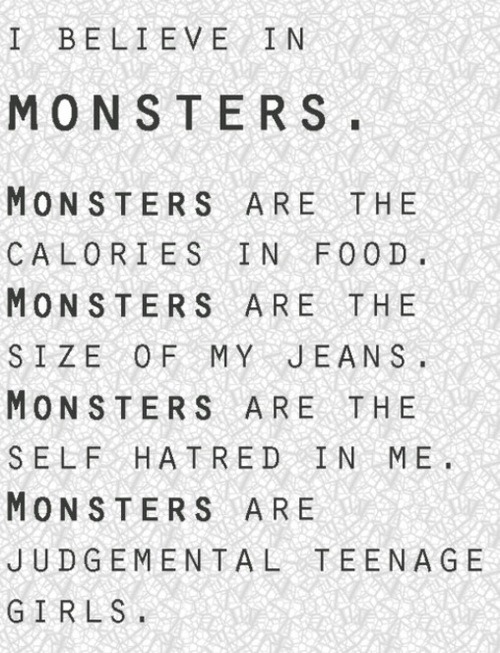
But we do hate fat people. Consciously, subconsciously this hatred saturates our culture.

If we are not actively attempting to make ourselves skinny, we are fat. Damnable. Damned.  Asking for our punishment.

So for those of us strong enough to be skinny, our killing would be buoyed by Far People's self-hatred.

Yes, let's make them a class, a type, a capitalised other: those Fat People. A cancer, corroding the true nature of being human -- other than human. Fat People.

Spit, scorn, hack. Kill.


•••


Could this happen?

We're well on our way. Billions spent on dieting, insecurity, self-killing anorexia, depression, anxiety.

Better than a genocide, we have an auto-in-fat-icide and we don't even know it.

What's to do?

I'm headed to the gym.

Thursday, February 14, 2013

Corpus Confusio; or, a Female Pope to Fix the World?

When the Pope calls it quits, we know we've reached a new chapter in the relationship between body and mind.

I've no basis to speculate on His Holiness' condition, but I do wonder if he has found himself with some kind of degenerative disorder like Alzheimer's -- and the awareness that his physical body may be left as the mindless leader of a great faith for an extended period of time.

At such an extreme, the Church's views on the sanctity of life and its opposition to any kind of euthanasia would test the limits of the Papal responsibility: how little human can a being be before no longer occupying the position chosen by God -- or, when does the soul leave the body?

Death has a clear and final meaning, but we can die a lot before we're dead.

This shedding of self, whether willful, contingent or divined, connects to other odd aspects of our current relationship between our physical and metaphysical and emotional selves.

I am ever struck by the legions of women walking the streets of Manhattan (and so many other centers of success), skinny to perfection, single, sour-pussed and sad-looking.  They stare at the ground, pound away at the treadmill—and so infrequently show any sense of a smile or laughter.

Perhaps its my own redoubled feminist misogyny, but my sense is that image and body have been put ahead of a wholeness of being, a happiness and lightness and adventuresomeness -- ahead of any free and open, curious, playful and creative potential.

Are such things the primary provenience of men?  Must we remain bound by a paradigm that defines strong, brilliant women as bitches?


If you've worked hard to have a hot body, why not be proud and confident?  I guess having to stare down the socially approved, constant lecherous glances and comments from men would exhaust even superwoman.  (For instance, I don't think this video is the answer, butt it does have over 2 million views.)

Perhaps this has to do with the fact that the Church so vehemently refuses to admit women into the priesthood.  I don't know how, exactly, but I have a hunch -- related to why conservative sects of Judaism and Islam insist upon women wearing certain kinds of hair styles or head coverings.

Do we still live the great temptation of Eden, day in and day out?  Really—we keep blaming women and causing them pain with their guilt?

Oh Papa.  Will it ever be -- oh, mama mia.

Cardinals -- go for it.  This election will be precedent-setting in any case.

Tuesday, February 12, 2013

Freedom — In America, you have a real freedom

En route to the Cairo airport -- after a morning together -- my driver began to open up a bit more about the current political situation in Egypt.

He shared some very wise observations.

Amusingly, if problematically in terms of gender: the women, he reflected upon seeing two stunning young ladies walk by - the last two years - wow, what the women have been able to share.

Pop music, rather than corrupting "authentic," fragile local cultures in fact inspires people to confront death-defying odds to seek liberty.  Pitbull is a current favorite, as is Kei$ha.  I shared Taylor Swift with him, and Wilco's "War on War."

John Kerry is extremely well regarded.  America needs a strong man as Secretary of State, he should be the next President.


When conversation turned to the gridlock in which we found ourselves, I recounted the great Saturday Night Live skit about hurricane Sandy in which the actor depicting Mayor Bloomberg says to President Obama, don't come to NYC, you cause traffic headaches, I'll have you arrested.

Obama -- arrested -- he chuckled.  

To make that kind of joke. 

Freedom.  In America, he said -- in America, you have a real freedom.

I continue to reflect on his words, in awe of our great democratic experiment.

Areopagitica Revisited: Or, talking about drugs and other controversial things

As Stanley Fish points out regularly, John Milton set the modern agenda for discussion of freedom of speech, liberty of conscience and the protections vested in academic tenure.

I don't agree with Fish about everything, but I believe he has the correct argument in this case, if I understand him correctly.

It's been a while since I read There's No Such Thing As Free Speech (and it's a good thing, too) or his Trouble with Principle.  But I'll do my best.

Really, it's pepped up pragmatism, a little less jargon-laden that Richard Rorty but not as elegant as its earliest American exponents—as described decently well in The Metaphysical Club.

Where does the law intersect with our right to express ourselves?

On the one hand, the right to swing one's fist ends where the other man's nose begins.  On the other, we can't yell fire in a crowded theater.  And what about checking out another person while you're in a committed relationship?

Between the three, where does the law intervene?

I'm not a lawyer (thank goodness) but my sense as an historian: you need to be very careful when you facilitate the communication of information that is either itself illegal or facilitates illegal behaviour.

For instance, child pornography creates big problems.  Can we read classical philosophers and study relationships between older men and younger boys without running afoul of some very restrictive laws that limit anything having to do with a minor's body or sexuality.

Or Fascism poses a frequently debated problem—for instance, Germany's restriction of Nazi material versus its permissibility in the US.

Also, when does it become proper to take action based on an idea, emotion or behaviour?  We've debated recently the concern about mentally ill people getting guns.

If someone says, "I'm going to get a gun and kill so and so," a therapist or a priest or a lawyer, I believe, must violate confidentiality and report the problem.  But, "god, I wish so and so got killed"?  Does that merit reporting?

I believe, in a paternalist way -- Filmer before Locke -- that an institution must protect its charges from acting in a way that could cause themselves dire harm.  If I presided over a school and on my campus I saw a student about to inject herself with heroin, for instance, I would feel a responsibility to stop the student.

Arguments at the extreme help, but they don't solve sticky problems in everyday life.

Currently, I lean toward thinking that institutions should ere on the side of caution when it comes to facilitating the transference of knowledge about illegal activities.  Institutions' primary responsibilities -- to its trustees (think of the word literally) - must include protecting its assets and preserving its existence against internal and external threats.  Such moral, ethical and financial stewardship cannot be taken lightly.

We can disagree with the law, but then we should take on the responsibility of changing it.  For instance, when it comes to pot, the citizens of Colorado and Massachusetts have taken this matter into their own hands.

Now, this doesn't establish the practice by which such determinations should be made.  That's a whole different matter, and deserves careful scrutiny, redundancy and review, consultation with legal counsel, and a means for appeal.

Talkin' Texan

A great story.  I'll practice once I buy my ranch.